
From Playing Computer Games to Achieving Lexical Knowledge: Linking Attitudes and Time Allocation with Vocabulary Acquisition

Ehsan Abbasi

CITE (APA Style): Abbasi, E. (2026, September 17). From playing computer games to achieving lexical knowledge: Linking attitudes and time allocation with vocabulary acquisition. SocArXiv. https://doi.org/10.31235/osf.io/pgaw7_v1
Abstract
The impact of video games on vocabulary acquisition has not received sufficient attention, despite a growing interest in the influence of digital games on vocabulary learning (i.e., DGVL) in the field of computer-assisted language learning (CALL). Particularly, it is uncertain whether the duration of time spent playing a video game and the attitude of English language learners (ELLs) have significant effects on EFL vocabulary acquisition. The present quasi-experimental study involved 40 male EFL students at a private language institute and examined the relationship between their opinions of a video game and the time allocated to it in relation to vocabulary acquisition. Specifically, this study explored the influence of these factors on receptive or productive vocabulary learning. Moreover, the vocabulary learning strategies employed by the participants when playing, along with the features they deemed essential for computer games to be engaging enough to support learning, were addressed in this study. The participants were required to complete a pretest, a posttest, a survey, and a self-reported timetable. The analyses did not reveal a meaningful correlation between the participants’ perceptions of the target video game and vocabulary acquisition. Additionally, it was found that the time spent playing the video game, coupled with prior language proficiency, helped to boost English vocabulary learning. Insights regarding the vocabulary learning strategies adopted and the features found appealing were also provided. These outcomes offer important insights for ESL/EFL instructors regarding the most effective approach to employing computer games as a novel vocabulary learning method.
Keywords: Computer-Assisted Language Learning (CALL), Game-Enhanced Language Learning, Digital Game-Based Vocabulary Learning (DGVL), Computer games, Video Games, ESL/EFL Pedagogy, TESOL, Second Language Acquisition, Vocabulary Acquisition.
INTRODUCTION
In today’s world, it is exceedingly rare to meet a person who denies the importance of computer technology, social media, and artificial intelligence. Developed countries consider it as a foundation for economic growth, as a lack of technological development can result in a depressed economy (Raja & Nagasubramani, 2018). The 21st century is the era in which individuals are born with extensive access to information technology, enabling them to interact, connect, and collaborate (Beck & Wade, 2006). Rideout et al. (2022) have reported that the average American teenager aged 13 to 18 spends approximately 8.5 hours per day engaging with electronic media, excluding the time they devote to it for learning purposes.
When considering education as one of the most essential components of life, digital literacy is key, as it has revolutionized teaching and learning (Taheri & Pennington, 2024). Students feel relieved of their concerns regarding their education due to the widespread availability of information online, including the curriculum and many interconnected artefacts such as links to other contents (Mirsharapovna et al., 2022). Particularly during the catastrophic COVID-19 pandemic, policymakers and curriculum designers acknowledged the importance of virtual teaching and learning, which employs computer technology in contrast to conventional educational methods (Hopkins, 2023). This change has been further accelerated by the integration of computer games into the field of education, resulting in the development of digital game-based learning (DGBL). The primary justification for incorporating computer games was their widespread use among individuals of varying ages (Entertainment Software Association, 2024).
Computer games have been extensively employed in the field of education, particularly in the acquisition of EFL/ESL vocabulary (i.e., digital game-based vocabulary learning [DGVL]). Ramezanali et al. (2021) stated that vocabulary acquisition is critical for the acquisition of a second language, and research has pointed out the challenging nature of vocabulary acquisition (e.g., Suárez et al., 2021). Therefore, computer games, educational or video/commercial, have emerged as valuable tools to enhance the lexical knowledge of ESL/EFL teachers and learners (Vnucko & Klimova, 2023). For instance, Saprudin et al. (2019) asserted that the implementation of DGVL not only increases academic achievement but also prevents class size from hindering active learning, in contrast to traditional teaching methods.
Accordingly, the purpose of the current study is to address the following research questions.
- Do the male EFL students’ enthusiasm for video games influence their receptive or productive English vocabulary acquisition?
- Does the duration of time spent playing a video game have a significant effect on receptive or productive English vocabulary acquisition?
- What vocabulary learning strategies (incidental, intentional, or a combination of both) are associated with the vocabulary acquisition of male Iranian students when playing video games?
- Which features of video games captivate male Iranian language learners the most?
Literature Review
Computer-assisted Language Learning (CALL) in TESOL
In the domain of teaching English to Speakers of Other Languages (TESOL), computers have become powerful instruments, improving teaching and learning experiences and facilitating the sharing of information. After the rapid growth of technology in 1980s, Computer-Assisted Language Learning (CALL) has gained popularity for over 30 years as a by-product of employing computer technology in English language teaching and learning (Otto, 2017). Also, the positive impacts of CALL on ESL/EFL acquisition have been explored by many scholars through the years (e.g., Miller, 2022). In English language classes, for example, Taghizadeh and Ejtehadi (2023) found that teacher educators acknowledged the effectiveness of online tools in encouraging interaction, thus enhancing learning. Similarly, a meta-analysis of 22 research studies was carried out by Lu and Xie (2024); they found that studies integrating computer technology into TESOL had a positive impact on the critical thinking and ESOL skills of students. By utilizing digital content that illustrates an instructional message through multiple cognitive channels, CALL has transformed language classes, compensating for teachers’ verbal instruction (Gilakjani et al., 2011). Some researchers even concentrated on the study of CALL in specific areas of language learning. Nation (2001) focused on computer-assisted vocabulary learning (CAVL) to highlight the favorable impact of computer technology on vocabulary acquisition. Similarly, Yip and Kwan (2006) carried out a quantitative study involving 100 participants, revealing that enhancing vocabulary learning was accomplished through playing an online vocabulary game. Findings from this study also indicated that the application of this specific CAVL method enhanced participants’ skill to retain more words over a longer period, in comparison to those who had not used it. These insights regarding the importance of computer technology in language acquisition establish the need for a more detailed investigation of the distinctive qualities of certain tools to facilitate TESOL goals and improve language learning.
Computer Games and TESOL
Exploring the impacts of CALL can be categorized into different subgroups based on the type of computer technology employed. To put it differently, ESL/EFL learning can be significantly improved by utilizing Artificial Intelligence (AI) (Mohammadi et al., 2024), online courses (Chong et al., 2024), corpus studies (Ma et al., 2024), computer software (Al-Maashani & Mudhsh, 2023), as well as mobile games and applications (Liu, 2024), among other approaches. Particularly, due to the pervasive use of computer games by ESL learners (Kow & Nardi, 2010), there has been a growing interest in understanding the effects of computer games on TESOL. For example, Peterson (2023) conducted a literature review that explored studies on the role of computer games in TESOL. The review revealed that the majority of studies showed an improvement in L2 language learning, notably vocabulary acquisition, through the inclusion of computer games.
Some of the features that make computer games engaging for language acquisition include their capacity to promote interaction among players (Bakan et al., 2022), thereby encouraging communicative practice in a social context. Games also frequently integrate elements such as reviewing, imitation, and repetition (Butler, 2017), which play a crucial role in improving language learning. Additionally, they create an engaging and stimulating environment that provides plenty of learning opportunities (Yiannakoulias, 2023). These characteristics allow computer games to be valuable and peculiar tools for improving the outcomes of TESOL. According to Butler (2017), thorough research into the efficacy of different language learning elements that were assumed to be present in computer games—including clear objectives, challenges, explicit guidelines, feedback, and captivating visual effects—suggests that the integration of these games into educational settings is intricate and requires meticulous consideration.
Different Types of Computer Games
Computer games can be categorized using several approaches, including their content (e.g., sports), the types of activities they involve (e.g., strategic games), the target audience (e.g., girls), and the platforms on which they are played (e.g., PlayStation). This paper seeks to classify computer/digital games based on the goals they are designed to accomplish. This classification indicates that computer games can be created to educate on a specific subject or simply to offer players a chance for entertainment (Zhang, 2018). Therefore, the former category is referred to as educational games, while the second category is recognized as video games (VGs). Hooshyar et al. (2023) suggested a straightforward definition of educational games as those developed to enhance motivation, interaction, and learning. For instance, the game created by Yılmaz and Sancak (2022) to teach individuals how to behave prior to or following an earthquake is considered an educational game. In contrast, VGs are specifically developed to provide amusement and indirectly convey new information (Chen & Hsu, 2020), and many of these games are available on the market.
In general, studies in the field of education concentrate on games designed for educational purposes, since it is assumed that these games provide explicit pedagogical content that can be added to the curriculum, thereby improving learning outcomes (Martinez et al., 2022). Thus, the impact of VGs on the teaching and learning of specific topics (gamification) has been relatively understudied. However, VGs, characterized by their immersive and appealing environments, may possess unexplored potential for achieving learning objectives, necessitating additional investigation in this area.
Vocabulary acquisition in TESOL and Computer Games
Over the years, following the integration of computer technology into daily life, computer games have gained widespread popularity, leading to the emergence of computer-assisted vocabulary learning (CAVL) as an important area within language education (Nation, 2001). This connection has generated considerable interest, particularly in exploring the potential of computer games as effective tools for vocabulary acquisition. Due to their inherent appeal and evolving nature, these games have become an interesting topic for investigation within the field of language acquisition (Abbasi & Dwyer, 2024).
The main reason for utilizing computer games in vocabulary learning is their ability to efficiently and effectively engage learners. In contrast to conventional approaches, learners frequently invest considerable time voluntarily participating in these games (Rideout et al., 2022), transforming the learning experience into a more enjoyable and less demanding task. This immersive and voluntary participation is an important factor that improves the efficacy of computer games as a means for vocabulary acquisition (Camacho Vásquez & Ovalle, 2019). It also carries similarities to the concept of translanguaging, as the games encourage learners to naturally use their unique language repertoire, thereby promoting both language learning and engagement (Pontier & Abbasi, 2024a, 2024b).
The positive value of digital game-based vocabulary learning (DGVL) has been proven by empirical studies. For example, Zou et al. (2021) conducted a comprehensive review of 21 studies, which underscored the beneficial impact of DGVL on vocabulary learning. In the same vein, Vnucko and Klimova (2023) carried out a comprehensive review, indicating that DGVL not only improved vocabulary retention but also produced positive emotions in learners. These outcomes highlight the multiple benefits of the development of cognitive skills and emotional support, positioning computer games as a powerful tool for language acquisition.
The Nature of Vocabulary Knowledge
We can differentiate between different types of vocabulary knowledge (Henriksen, 1999). Laufer and Nation (2013) highlighted the necessity of distinguishing between the receptive and productive characteristics of vocabulary knowledge, as the former represents passive knowledge while the latter signifies active awareness. In a similar vein, Li and Hafner (2022) emphasized that receptive knowledge refers to the proficiency in recognizing words during reading or listening activities. Productive knowledge of vocabulary denotes the ability to produce words in spoken and written forms (see also Pan, 2023). These differences are important as they underscore the multifaceted nature of vocabulary acquisition, impacting language education. Receptive vocabulary knowledge typically precedes the productive counterpart, establishing a basis for more active application (Taylor, 1990). Studies indicate that learners generally comprehend and recognize a wider variety of words than they can effectively employ in communication, highlighting the necessity for focused teaching techniques to address this disparity (Laufer & Nation, 2013). Moreover, recognizing the interaction between these features of vocabulary knowledge may guide curriculum development, ensuring an equal emphasis on both skills to facilitate language development.
Additionally, one of the most crucial factors to consider is vocabulary learning strategies (VLSs). VLSs are the cognitive processes and behaviors that students use to comprehend, acquire, or retain information (O’Malley & Chamot, 1990). Oxford (1990) explained vocabulary acquisition using the terms direct and indirect. If resources like word lists are used, she claimed, vocabulary learning happens directly; if not, indirect attention has been paid. Moreover, another distinction has been made by Nation (2001) when it comes to incidental versus intentional VLSs. According to Nation (2001), incidental vocabulary learning takes place in specific contexts where meaning is not prioritized, whereas intentional vocabulary acquisition occurs in different ways. In other words, deliberate learning happens in a way that is “more conscious” (p. 341). Nation (2001) also pointed out that it is challenging to distinguish between the two types because “conscious attention” can be witnessed in a lot of learning activities (p. 233).
To improve vocabulary acquisition in ESL learners, researchers have recommended incidental learning strategies (e.g., Hakobyan, 2023). For instance, Dang and Long (2023) claimed that regularly reading online news for pleasure can incidentally help one acquire a wide range of vocabulary. As individuals frequently acquire their first language with greater ease and proficiency than their second language, Hwang and Wang (2016) posited that the former is the result of incidental learning in an immersive environment, also known as situated learning (Meihami, 2023), rather than the conscious study of books.
Researchers examined the extent of incidental vocabulary acquisition in computer-game-embedded learning. For example, in a study that examined the impact of an educational adventure computer game on the vocabulary acquisition of 21 Taiwanese college students, Chen et al. (2023) revealed that those who merely played the game benefited greatly from incidental vocabulary learning. Likewise, a study was carried out by Sundqvist (2019) with over 1000 Swedish participants. After conducting extensive mixed-methods research, she demonstrated that playing computer games resulted in beneficial outcomes for incidental vocabulary acquisition.
On the other hand, some experts have documented the superiority of intentional acquisition over incidental vocabulary acquisition (e.g., Wong et al., 2021), or at least the ways that intentional and incidental vocabulary learning activities supported each other (e.g., Nation, 2001). Calvo-Ferrer and Belda-Medina (2021) selected 54 Spanish ESL students to take part in their study to gain a better understanding of the role that computer games played in intentional vocabulary learning. They noticed that combining a computer game with an intentional approach to language learning (i.e., using the game on purpose) improved acquisition.
Video games and Vocabulary acquisition in TESOL
Video games (VGs) have not received the same level of attention as their educational counterparts, especially in the field of language learning research, as a category of computer games. A significant amount of work has been focused on educational games (Martinez et al., 2022), which have been tailored with instructional goals in mind. For instance, Reynolds and Kao (2021) studied the influence of an educational computer game on 45 Taiwanese college students who needed advanced English writing training. The game used in this study was specifically developed to support learners in acquiring the English article system. Findings indicated that the grammar feedback delivered through a target computer game resulted in the enhanced retention of grammatical information. Similarly, Jia et al. (2023) studied the influence of an educational computer game on Chinese students in English for Academic Purposes (EAP) classes and reported vocabulary growth in this game-based learning (GBL) approach.
In spite of their potential, VGs are still understudied compared to educational computer games. Nevertheless, research that has investigated the efficacy of VGs as language learning tools has frequently found positive results. Although not initially created with educational goals, these games offer appealing environments supporting language acquisition. In this sense, Xu et al. (2020) conducted a scoping review of digital game-based (English) language learning and suggested that there should be more frequent use of VGs to attain better outcomes for English language learners (ELLs), given that professionals in this field typically lack extensive training in programming or digital game design.
The effect of VGs on foreign language acquisition has also been examined. DeHaan (2005) studied the impact of playing a baseball computer game on intermediate students learning Japanese as a foreign language. Using VGs, players improved their Japanese vocabulary knowledge by encountering new words in the context during playtime, which led to better reading comprehension. Learning vocabulary becomes more meaningful and interesting when playing games like this, which provide authentic language learning opportunities that surpass rote learning (Hwang & Wang, 2016).
In the field of TESOL, gaining sufficient vocabulary is a key component of language acquisition, and inadequate vocabulary frequently results in a decline in motivation among language learners (Alahmadi & Foltz, 2020; Nation, 1999). Studies concentrating on English vocabulary acquisition through VGs have revealed encouraging outcomes. A study conducted by Hung and Yeh (2023) engaged participants in enhancing their proficiency in English and lexical understanding as well as getting acquainted with the foundations and techniques of creative thinking using a video game. The study demonstrated significant effects of VG on vocabulary growth and creative thinking. In a similar vein, Weisi and Hajizadeh (2025) analyzed the influence of engaging with VGs on incidental vocabulary acquisition among teenage EFL learners through the game Minecraft. The results of this quantitative study indicated that the players exhibited impressive performance.
Furthermore, research has shown that VGs strengthen the retention of words over time. Particularly, Abbasi and Dwyer (2024) found that learners who encountered repetitive linguistic elements within the game demonstrated better retention of recently acquired receptive/productive vocabulary. In other words, vocabulary was retained by young language learners who participated in the VG Spore for four months after the intervention. Lee (2023) reported similar findings regarding retention levels after integrating a VG (Her Story) and administering a delayed posttest four weeks later. The aforementioned examples show that VGs not only facilitate the acquisition of vocabulary but also ensure that learners recall these words for an extended period of time following gameplay.
Gaps in Literature
Research shows that computer games can assist people learn vocabulary in a second language. (e.g. Jia et al., 2023; Vnucko & Klimova, 2023; Weisi & Hajizadeh, 2025). However, little research has been done on how students’ enthusiasm for and time spent playing VGs affects their acquisition of L2 vocabulary.
Next, two ideas that are frequently thought to make up the nature of learning are incidental and intentional vocabulary acquisition; however, these ideas have received less attention when it comes to vocabulary learning strategies. The development of more specialized and effective vocabulary learning methods may be guided by investigating how students employ incidental and intentional vocabulary acquisition strategies (Nation, 2001; Sasson et al., 2025).
Theoretical Frameworks
This study is grounded in the theoretical frameworks of engagement (Fredricks et al., 2004) and interest development (Hidi & Renninger, 2006) to examine students’ vocabulary acquisition through VGs.
Engagement
A task that is engaging maintains individuals’ attention (Viberg et al., 2021) and the amount of time allocated to a language learning task may be a reliable indicator of a particular kind of engagement called behavioral engagement. Although Fredricks et al. (2004), discussed various definitions of engagement and their overlapping nature, they presented three types of engagements including behavioral, emotional, and cognitive engagement. Behavioral engagement is the degree of active involvement in a given learning activity. Emotional engagement is based on the individuals’ affective reactions to an activity. Cognitive engagement is relevant to being strategic and demonstrating self-regulation. Despite the fact that these three constructs are accepted in education, people in the field of language teaching and learning hold different views on the relationship between time spent and language acquisition.
Interest development
The concept of interest in an activity is closely connected to engagement (Troy Frensley et al., 2020). Hidi and Renninger (2006) delineated four stages of interest development: “triggered situational interest, maintained situational interest, emerging individual interest, and well-developed individual interest” (pp. 114–115). Triggered situational interest denotes a state of mind induced by transient shifts in emotional and cognitive processes. Maintained situational interest arises following the triggered state, characterized by prolonged persistence over an extended period. The third stage entails the development of individual interest, as an individual begins to seek recurrent involvement in particular tasks. Finally, a well-developed individual interest signifies a mental attitude that is somewhat lasting and promotes sustained participation in activities over the course of time. According to Hidi and Renninger (2006) and the purported advantages of engagement, it is crucial to discover the specific factors that ignite students’ interest in playing VGs (Zepke et al., 2010).
Employing the above-mentioned frameworks, the present research attempted to recognize the elements that influence the development of learners’ enthusiasm for VGs—from triggered situational interest to well-developed individual interest—regardless of the duration of their engagement.
Methods
Context and Participants
40 Iranian male EFL students from pre-existing classes (intact classes) at a private language institute formed the experimental and control groups (20 each) in this study. The participants exhibited homogeneity in English language proficiency, as indicated by the institute’s placement test results, which classified them as pre-intermediate ELLs. The language learners, aged 13-19, were enrolled in a conventional teacher-centered course, predominantly delivered through instructor lectures, with minimal variation in pedagogical activities. The rationale for selecting all participants from the same classes was to control the vocabulary they acquired during the language course. That is, the researcher was able to disregard the words that were frequently encountered during the language program while on the test design process.
Video Game
Spore, an immersive role-playing life-simulation game, served as the video game (VG) utilized in the study. The game illustrated the narrative of evolution, beginning with primordial stages and progressing through the emergence of civilizations and subsequent technological revolutions. The players had the opportunity to design their own avatars and select the desired trophic/food-chain-based classification for their creations. Although this game exhibited acceptable visuals and sound effects (Figure 1), players did not need exceptional skills to engage with it. Additionally, the plot of this game was not overly intricate to distract players’ attention from the verbal components of the game, thereby limiting their ability to learn new words (Ayres & Sweller, 2005). Given the significance of the participants’ psychological well-being, the computer game reflected a normal course of life with minimal violence.
Figure 1. Sample illustrations of the target VG

Data collection
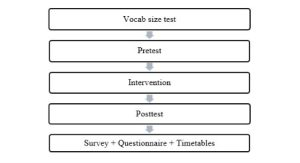
This quantitative study employed a pretest-posttest design to address the research questions. The method supported the assessment of changes in vocabulary knowledge prior to and following the intervention.
At the beginning of the study, prior to evaluating the participants’ vocabulary gains, the participants’ current level of English vocabulary knowledge was measured using the Vocab Size Test developed by Nation and Beglar (2007). The average result of this valid and reliable multiple-choice diagnostic test acted as a benchmark to optimize the design of future tests by exclusively measuring vocabulary that participants are likely to find unfamiliar. In other words, it was merely a diagnostic test intended to assist in the development of the primary tests of this study. The use of the Vocab Size Test is in line with Krashen’s (2003) input hypothesis, suggesting that language learners may struggle to acquire a skill if it significantly exceeds their existing linguistic competence, making the evaluation of this language skill acquisition invalid.
To measure the degree to which the participants acquired new words from the written vocabulary displayed in the computer game, two paper-and-pencil tests were developed and administered as pretests. One of them was a reliable multiple-choice test (i.e., Cronbach alpha reliability coefficient = 0.83) to measure the participants’ receptive vocabulary knowledge. The goal of the other test was to assess the participants’ productive vocabulary knowledge through fill-in-the-blank items. Similarly, the reliability of this test was checked using the Cronbach alpha coefficient, which was found to be 0.84. The learning objectives were followed to ensure that each question was relevant and content valid. The responses to both tests were identical; thus, the production test was administered prior to the recognition test within the same session. In other words, the participants may have remembered the answers if the recognition test had been provided first or if the tests had been conducted in separate periods. Moreover, a brief intermission was set up between the two assessments to shift the examinees’ conscious attention to the responses of the production test.
After the pretest, the participants were divided into two groups. The experimental group was provided with the target VG (i.e., Spore) and was given a three-week time frame to complete the desired task at home. They received explicit instructions and guidance that helped them progress in approaching the tasks. The control group maintained their regular classes without the implementation of the computer game.
Following the intervention, the experimental and control group members received the posttests in two separate sessions. The tests and administration procedures were identical to the pretests, with the notable exception being the sequence of the questions. It is important to emphasize that these assessments evaluated knowledge rather than fluency, thus providing learners with sufficient time to complete the tests. In the same session, the experimental group responded to a five-point Likert scale questionnaire, which included a question concerning their overall opinion of the game immediately after the posttest. They also completed post-surveys in their native language (i.e., Farsi) that dealt with the vocabulary learning strategies (VLSs) they used and identifying the features they believed a good computer game for learning should exhibit. Furthermore, as requested by the researcher, they submitted a timetable detailing the time they allocated daily to accomplish the required tasks in the game. Figure 2 depicts a comprehensive overview of the data collection procedure.
Figure 2. Data collection procedure
Data Analysis
Statistical analyses were conducted on SPSS to answer the research questions. Regarding the first research question investigating the relationship between the participants’ opinions of the VG and their performance on receptive/productive vocabulary tests, standard multiple regression analyses were conducted with the vocabulary test results as dependent variables and the participants’ responses to the Likert scale question as the independent variable. To address the second research question about the relationship between students’ progress and time spent playing, simple linear regression was carried out, using the duration of gaming for each participant as the independent variable and the results of vocabulary tests as the dependent variables.
Moreover, the data obtained from the post-surveys identified and summarized the VLSs employed during the intervention, along with the participants’ understanding of the characteristics of an effective game for learning (i.e., the third and fourth research questions). In other words, the objective of these two research questions was to compile responses to the surveys and deliver descriptive statistics that illustrate the strategies and features that were frequently cited in the responses of the participants.
Results
The present study builds upon the findings of Abbasi and Dwyer (2024), where data from participants was originally analyzed to determine the impact of a video game (VG) on receptive and productive vocabulary acquisition. In that study, the researchers noticed that the VG significantly (i.e. p < .05) improved the vocabulary knowledge of players, both productively and receptively. Also, the retention rates after four months were considerably higher than those that had been previously reported. Figure 3 depicts an overview of the findings.
Figure 3. Impact of the VG on receptive/productive vocabulary acquisition

To conduct the previously mentioned statistical analyses (i.e., standard multiple regressions and simple linear regression) answering the research questions, only the pre/posttest scores in Abbasi and Dwyer (2024) were used as the dependent variables.
Research Question 1
The first research question of the present study is: Does EFL students’ opinion of the video game influence their receptive or productive English vocabulary acquisition?
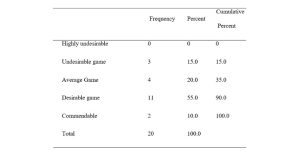
In order to learn about participants’ opinions of the target VG, after the posttest, they were requested to respond to a five-point Likert scale question in their native language, Farsi. Table 1 shows their responses to the question, with five response options varying from highly undesirable to highly commendable.
Table 1. Participants’ Opinion About the Target VG
As mentioned earlier, multiple regressions were conducted, and the outcomes of these analyses are presented in Table 2.
Table 2. Factors Influencing Receptive/Productive Vocabulary Acquisition: Multiple Regression Analyses
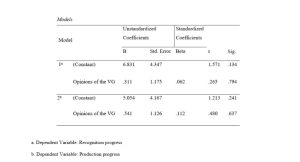
A significant regression equation was not identified in the recognition vocabulary scores (F (1, 18)
= 0.07, p > 0.05), with an R2 of 0.004. The independent variable did not serve as a significant predictor of improvements in receptive vocabulary knowledge.
The regression equation was not found to be significant in relation to the rise in productive vocabulary knowledge (F (1, 18) =0.23, p >0.05), with an R2 of 0.013. Consequently, the participants’ opinion about the target VG did not serve as a significant predictor of their progress.
Research Question 2
The second research question is: Does the duration of time spent playing a video game have a significant effect on receptive or productive English vocabulary acquisition?
The timetables delivered by participants following the posttest, indicating how much time they spent playing the target VG, were utilized as the independent variables (Table 3), while the observed progress in receptive/productive vocabulary knowledge was regarded as the dependent variable. Considering these two factors, a simple linear regression analysis was performed, and the results are presented in Table 4.
Table 3. Duration of time spent playing the VG

Table 4. Factors Influencing Receptive/Productive Vocabulary Acquisition: Simple Linear
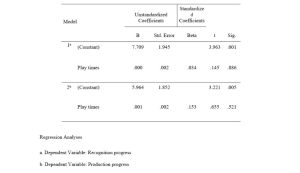
The amount of time allocated to playing the target VG was used to predict the growth in receptive and productive English vocabulary knowledge through the calculation of two simple linear regressions. Considering receptive vocabulary acquisition, the regression equation was not significant (F (1, 18) =0.21, p >0.05), with an R2 of 0.001. Likewise, production test scores did not exhibit any significant relationship (F (1, 18) =0.43, p >0.05).
As a result of these findings the researcher felt the need to conduct more in-depth investigations into what had happened as a result of this unanticipated outcome. Consequently, he recorded the grade point averages (GPAs) of the learners for the previous four semesters at the language center after obtaining the required permissions and the assistance of the institution’s supervisor. It was noteworthy that three of the top-scoring participants had a GPA of 4 out of 4 and the data obtained from those three students were removed from the experimental group’s dataset, and simple linear regressions were recalculated. This time, a significant effect was identified, indicating that prior English language skills must be controlled in this type of research. Subsequently, hierarchical regressions were carried out to compensate for the mean GPAs. These analyses revealed that the time assigned to gameplay had a significant impact on the acquisition of productive vocabulary (beta =.52, p < 0.05).
Research Question 3
The third research question is: What vocabulary learning strategies (incidental, intentional, or a combination of both) are associated with the vocabulary acquisition of male Iranian students when playing video games?
The survey questions inquired about the participants’ strategies for navigating the unfamiliar words encountered during gameplay. The themes observed in the responses received were grouped into incidental and intentional strategies, as presented in Table 5 and Figure 4.
Table 5. Participants’ Preferred VLSs
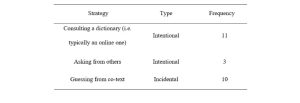
Figure 4. Distribution of incidental or intentional VLSs

Upon encountering an unfamiliar word, all respondents indicated that they had employed various VLSs (i.e., incidental, intentional, or both) to understand the meaning. The most popular intentional strategy was using a dictionary, while guessing the meaning of words was also frequently employed. Additionally, nearly fifty percent of the respondents (9 out of 20) gained benefits from employing combined strategies.
Research Question 4
The fourth research question is: Which features of video games captivate male Iranian language learners the most?
The results of the open-ended survey question also revealed diverse responses (i.e. some participants contributed multiple answers) to the question as illustrated in Table 6 and Figure 5. As stated earlier, a variety of responses were provided, and to increase conciseness, they were categorized into five major categories. By incorporating these features, the computer game can become more engaging for the players, which in turn facilitates (vocabulary) learning.
Table 6. Participants’ opinion the feature(s) of a good computer game for learning
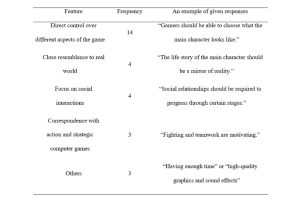
Figure 5. The players’ responses to feature(s) of a good computer game for leaning

Discussion
Players’ Opinions of the Video Game and Vocabulary Acquisition
Individuals’ attitudes and opinions regarding a phenomenon depend on the enjoyment and level of interest developed during their engagement with it (Troy Frensley et al., 2020). In the same vein, people’s interest in an educational activity fosters greater engagement, resulting in enhanced academic achievement (Lase & Halawa, 2024). It is widely accepted that enjoyment and interest are critical determinants in the process of learning (Fryer et al., 2023). Given that enjoyment is a persistent characteristic of computer games (Chen & Hsu, 2020), particularly video games, it can be posited that recognizing a VG as interesting would facilitate vocabulary acquisition to a greater extent.
In contrast to the hypothesized relationship between VGs and receptive/productive vocabulary learning, the findings of the present study did not show any correlation between the participant’s perception of the target VG and vocabulary acquisition. To put it simply, a greater interest in the target VG did not necessarily lead to higher levels of language learning.
Different responses to a five Likert-scale question indicated that participants held differing
expectations for an ideal computer game. Nonetheless, the improvements they achieved in English vocabulary acquisition, despite the answers they provided, require an explanation, as it is widely accepted that a positive attitude toward computer games enhances language learning (Allen et al., 2014). Informal conversations between the researcher and the participants following the posttest phase revealed that the majority of them had found the game to be fun. In particular, some expressions used to describe a perfect computer game attracted the researcher’s attention. For instance, one participant stated a preference for a computer game featuring high-quality graphics, while another participant favored online computer games. Incorporating these statements into their improved receptive/productive vocabulary acquisition leads us to the conclusion that language learners may still find certain aspects of a VG to be appealing, even if the VG is not classified as an ideal computer game. Consequently, the rate of language learning, particularly vocabulary acquisition, may be increased. Given this justification, the notion that the educational value of computer games is not an inherent, all-or-nothing attribute and is contingent upon several variables such as player attributes and psychological factors (Rosenthal & Ratan, 2022) seems reasonable. In other words, a digital game-enhanced vocabulary learning program may not necessarily fail if language learners are not highly interested in a specific computer game.
Playing Time Spans, and Vocabulary Acquisition
The preliminary regression analysis concerning the participants’ receptive and productive vocabulary acquisition, alongside the reported duration of gaming, revealed no proof that vocabulary learning was influenced by the amount of time spent playing. This finding contradicts Chen et al. (2019), who indicated that extended digital gameplay leads to enhanced vocabulary acquisition. Given the possible relationship between students’ prior English language skills and vocabulary acquisition (Gordon, 1984), as reported in the results section, the researcher made some modifications to the procedure of data analyses by excluding the data obtained from some participants. This time, a significant impact of gaming and productive vocabulary acquisition was revealed. Even though the exclusion of those students’ test scores seems to be reasonable, it is important to be cautious when interpreting this result, as it is in stark contrast with some studies like Lee (2023), who claimed that previous language proficiency not only fails to enhance but also negatively affects vocabulary acquisition.
Despite the data analysis adjustment, a source of uncertainty remains, since other factors beyond prior language proficiency (e.g., age group, gender, and level of competitiveness) may influence the success of vocabulary acquisition through video games. Moreover, the limited number of participants threatens the generalizability of the results. However, the degree of time spent engaging with a VG can be a key variable, if not the only variable, in productive vocabulary acquisition.
Vocabulary Learning Strategies
The respondents indicated that they had employed three types of strategies for vocabulary learning: Consulting a dictionary, asking from others, and guessing from co-text. While many studies have mentioned a variety of micro strategies among learners, the perspectives described in this study and those of others share similarities. For example, Kulsum and Fitri (2025) also identified dictionary use and collaborative learning as two strategies that language learners adopted to enhance their language proficiency. Comparably, Li and Wang (2025) discussed strategies such as contextual guessing, the use of electronic dictionaries, and task-based reading. However, referring to other studies (e.g., Butowska et al., 2022), they ranked guessing as a frequent but less beneficial strategy. Overall, utilizing a combination of strategies has often been reported as a means to achieve improved outcomes (e.g., Chung et al., 2025).
When classifying the strategies into incidental and intentional vocabulary learning strategies, it is striking that the participants engaged in both kinds in a relatively balanced manner, with no one category being employed more frequently than the other. This finding is consistent with those of Sasson et al. (2025).
The Features of Computer Games
Although some studies have identified key attributes of an effective VG for (language) acquisition, Butler’s (2017) comprehensive research on digital games and their impact on young learners’ (language) development stands out as a significant contribution. She listed the most desirable game elements cited by young learners and asserted that eighty percent of these elements were tackled by experts in previous studies on computer games.
The current study identified four prevalent themes in the survey responses. The majority of the participants regarded direct control over different aspects of the game as a critical component of video games. It is in perfect alignment with Butler’s (2017) “control” factor: “For example, players can choose a difficulty level” (p. 9). Similarly, and closely related to Butler’s concept of ‘interaction,’ several participants highlighted social interactions as a desirable aspect of a VG.
Butler also demonstrated that learners viewed unreality as a commendable characteristic; however, this contrasts with the findings presented here, as several students indicated that the close resemblance to real-world events is of importance. The last common characteristic cited by the respondents was correspondence with action and strategic computer games. There is no rigid alignment between any of Butler’s elements and this feature. For clarity, it can be perceived as a synthesis of various components (i.e. explicit rules, challenges, and time limitations).
Conclusion
The current research expands upon the findings of Abbasi and Dwyer (2024), which analyzed data to evaluate the impact of a video game (VG) on English receptive and productive vocabulary acquisition. It proved that the English vocabulary knowledge of players was significantly improved by using the VG (i.e., p < 0.05), and the results were in line with Hung and Yeh (2023) and Weisi and Hajizadeh (2025).
The primary objectives of this research study were to investigate whether the English vocabulary acquisition of EFL students is influenced by their opinion of a VG and whether the amount of time spent engaging in the same game has a significant effect on English vocabulary acquisition. This study also addressed the vocabulary learning strategies that English language learners used during play, as well as the features that they deemed essential for computer games to be engaging enough to facilitate learning. Meaningful clues about the pedagogical advancements that VGs may achieve in the field of English language instruction can be obtained through addressing these concerns. The data was collected by the researcher in intact classes of 40 students in Iran, which is an EFL context, using timetables, questionnaires, and open-ended surveys.
The following conclusion was drawn from the evaluation of participants’ responses to questions
on their perceptions of the target VG and their vocabulary test scores: The growth of vocabulary knowledge was not reliably predicted by the degree of learners’ interest in the VG. In other words, the gamers’ attitude toward the target VG did not affect their receptive or productive vocabulary knowledge. Nevertheless, language learners might still find particular features of the VG to be attractive, though the VG failed to qualify as a desirable computer game. As a result, the rate of vocabulary acquisition might be enhanced. In an EFL context, it was also found that the amount of time allocated to playing the target VG, coupled with prior language proficiency, helped to boost English vocabulary learning. Yet, the improvement was evident in the domain of productive rather than receptive vocabulary knowledge.
The investigation of vocabulary learning strategies (VLSs) revealed that participants predominantly utilized two techniques for acquiring new words: consulting a dictionary and guessing meaning from co-text. By classifying them into separate categories of incidental and intentional VLSs, it can be established that both types were used in a fair balance, and it is advisable to acknowledge the complementary function of incidental and intentional VLSs.
Finally, findings from open-ended surveys indicated that, overall, the integration of TESOL contexts within VGs would be more appealing if they communicated a sense of authority, authenticity, and enjoyment. The respondents pointed out that the ability to control different aspects of the game, its resemblance to real life, and the incorporation of features from popular computer games were essential.
The findings of this study provide important insights for ESL/EFL teachers on how to effectively utilize an innovative vocabulary learning method. This approach would offer foreign language learners a safe space that can be modified to their preferences and needs, thereby supporting language acquisition through translanguaging practices (Pontier & Abbasi, 2024a, 2024b).
The present research is subject to certain limitations. Even though the researcher was able to monitor the actions and behaviors of the students by involving 40 participants from pre-existing (intact) English language classes, the inclusion of more participants can result in more generalizable results. Furthermore, due to the significance of EFL learners’ traits in the vocabulary acquisition process, particularly gender, age, and language proficiency, further studies can be conducted to investigate the impact of more diverse variables. This will provide teachers as well as curriculum designers in the field with more data on how to implement VGs into or outside of the classroom.
References
Abbasi, E., & Dwyer, E. (2024). The Efficacy of Commercial Computer Games as Vocabulary Learning Tools for EFL Students: An Empirical Investigation. Sunshine State TESOL Journal, 16(3), 24-35. http://dx.doi.org/10.2139/ssrn.5100185
Alahmadi, A., & Foltz, A. (2020). Effects of Language Skills and Strategy Use on Vocabulary Learning Through Lexical Translation and Inferencing. Journal of Psycholinguistic Research, 49(6), 975–991. https://doi.org/10.1007/s10936-020-09720-9
Allen, L. K., Crossley, S. A., Snow, E. L., & McNamara, D. S. (2014).
L2 writing practice: Game enjoyment as a key to engagement. Language Learning & Technology, 18, 124–150. http://dx.doi.org/10125/44373
Al-Maashani, S., & Mudhsh, B. A. (2023). Educational and instructional technology in EFL/ESL classrooms: A literature review. International Journal of Language and Literary Studies, 5(2), 292-304. https://doi.org/10.36892/ijlls.v5i2.1347
Ayres, P., & Sweller, J. (2005). The Split-Attention Principle in Multimedia Learning. In The Cambridge handbook of multimedia learning / (Vol. 2, pp. 135–146). University of Cambridge. https://doi.org/10.1017/CBO9780511816819.009
Bakan, U., Han, T., & Bakan, U. (2022). Learner perceptions and effectiveness of using a massively multiplayer online role-playing game to improve EFL communicative competence. Knowledge Management & E-Learning, 14(3), 286–303. https://doi.org/10.34105/j.kmel.2022.14.016
Beck, J. C., & Wade, M. (2006). The kids are alright: How the gamer generation is changing the workplace. Harvard Business Press.
Bonilla, C., Hughes, M. M., Tare, M., & Vatz, K. (2021). Self‐study in language learning: Relationships among time, activities, and learning outcomes. Foreign Language Annals, 54(2), 452–475. https://doi.org/10.1111/flan.12520
Butler, Y. G. (2017). Motivational elements of digital instructional games: A study of young L2 learners’ game designs. Language Teaching Research, 21(6), 735-750. https://doi.org/10.1177/1362168816683560
Butowska, E., Hanczakowski, M., & Zawadzka, K. (2022). You won’t guess that: On the limited benefits of guessing when learning a foreign language. Memory & Cognition, 50(5), 1033–1047. https://doi.org/10.3758/s13421-021-01254-2
Calvo-Ferrer, J. R., & Belda-Medina, J. (2021). The Effect of Multiplayer Video Games on Incidental and Intentional L2 Vocabulary Learning: The Case of Among Us. Multimodal Technologies and Interaction, 5(12), 80. https://doi.org/10.3390/mti5120080
Camacho Vásquez, G., & Ovalle, J. C. (2019). The Influence of Video Games on Vocabulary Acquisition in a Group of Students from the BA in English Teaching. GIST Education and Learning Research Journal, 19, 172-192. https://doi.org/10.26817/16925777.707
Chen, C.-M., Liu, H., & Huang, H.-B. (2019). Effects of a mobile game-based English vocabulary learning app on learners’ perceptions and learning performance: A case study of Taiwanese EFL learners. ReCALL (Cambridge, England), 31(2), 170–188. https://doi.org/10.1017/S0958344018000228
Chen, H.-J. H., & Hsu, H.-L. (2020). The impact of a serious game on vocabulary and content learning. Computer Assisted Language Learning, 33(7), 811–832. https://doi.org/10.1080/09588221.2019.1593197
Chen, H.-J. H., Hsu, H.-L., & Chen, Z.-H. (2023). A study on the effect of adding L1 glosses in the subtitle of an adventure game for vocabulary learning. Interactive Learning Environments, 31(4), 1889–1905. https://doi.org/10.1080/10494820.2020.1863233
Chen, M. (2024). Computer-aided feedback on the pronunciation of Mandarin Chinese tones: using Praat to promote multimedia foreign language learning. Computer Assisted Language Learning, 37(3), 363–388. https://doi.org/10.1080/09588221.2022.2037652
Chong, S. W., Khan, M. A., & Reinders, H. (2024). A critical review of design features of LMOOCs. Computer Assisted Language Learning, 37(3), 389–409. https://doi.org/10.1080/09588221.2022.2038632
Chung, E., Fung, D., & Wan, A. (2025). A mixed-methods study of strategy use in academic vocabulary learning among first-year undergraduates in Hong Kong. Journal of English for Academic Purposes, 74, 101482-. https://doi.org/10.1016/j.jeap.2025.101482
Dang, T. N. Y., & Long, X. (2023). Online News as a Resource for Incidental Learning of Core Academic Words, Academic Formulas, and General Formulas. TESOL Quarterly, 58(1), 32–62. https://doi.org/10.1002/tesq.3208
DeHaan, J. W. (2005). Acquisition of Japanese as a Foreign Language Through a Baseball Video Game. Foreign Language Annals, 38(2), 278–282. https://doi.org/10.1111/j.1944-9720.2005.tb02492.x
Entertainment Software Association. (2024). 2024 Essential Facts About the Video Game Industry. Retrieved September 08, 2024, from https://www.theesa.com/resource/2022-essential-facts-about-the-video-game-industry/
Fredricks, J. A., Blumenfeld, P. C., & Paris, A. H. (2004). School engagement: Potential of the concept, state of the evidence. Review of Educational Research, 74(1), 59–109. https://doi.org/10.3102/00346543074001059
Fryer, L. K., Bovee, H. N., Witkin, N., & Matthews, P. (2023). Nudging students’ interest in learning a new language: An experimental proof of concept for an online informational-nudge. System (Linköping), 119, 103162-. https://doi.org/10.1016/j.system.2023.103162
Gilakjani, A. P., Ismail, H. N., & Ahmadi, S. M. (2011). The Effect of Multimodal Learning Models on Language Teaching and Learning. Theory and Practice in Language Studies., 1(10). https://doi.org/10.4304/tpls.1.10.1321-1327
Gordon, H. H. (1984). The Five-At-A-Time Vocabulary Method for Use with or without Microcomputers. Journal of College Reading and Learning, 17(1), 136-141. https://doi.org/10.1080/10790195.1984.10850243
Hakobyan, N. K. (2023). The Relationship Between Incidental Vocabulary Learning and Extensive Listening to Podcasts. International Journal of TESOL Studies, 5(2), 79. https://doi.org/10.58304/ijts.20230207
Henriksen, B. (1999). THREE DIMENSIONS OF VOCABULARY DEVELOPMENT. Studies in Second Language Acquisition, 21(2), 303–317. https://doi.org/10.1017/s0272263199002089
Hidi, S., & Renninger, K. A. (2006). The Four-Phase Model of Interest Development. Educational Psychologist, 41(2), 111–127. https://doi.org/10.1207/s15326985ep4102_4
Hooshyar, D., Mawas, N. E., Milrad, M., & Yang, Y. (2023). Modelling Learners to Early Predict their Performance in Educational Computer Games. IEEE Access, 11, 20399– 20417. https://doi.org/10.1109/ACCESS.2023.3249286
Hopkins, S. (2023). Computer says no? Limitations of tech-focused transitions to higher education for Australian LSES students. Teaching in Higher Education, 28(7), 1798–1814. https://doi.org/10.1080/13562517.2021.1931837
Hung, H.-T., & Yeh, H.-C. (2023). Augmented‐reality‐enhanced game‐based learning in flipped English classrooms: Effects on students’ creative thinking and vocabulary acquisition. Journal of Computer Assisted Learning, 39(6), 1786–1800. https://doi.org/10.1111/jcal.12839
Hwang, G. J., & Wang, S. Y. (2016). Single loop or double loop learning: English vocabulary learning performance and behavior of students in situated computer games with different guiding strategies. Computers & Education, 102, 188-201. https://doi.org/10.1016/j.compedu.2016.07.005
Jia, W., Pack, A., Guan, Y., Zhang, L., & Zou, B. (2023). The influence of game-based learning media on academic English vocabulary learning in the EFL context. Computer Assisted Language Learning, 1–25. https://doi.org/10.1080/09588221.2023.2276800
Kow, Y. M., & Nardi, B. (2010). Culture and creativity: World of Warcraft modding in China and the US. In Online worlds: Convergence of the real and the virtual (pp. 21-41). Springer, London. https://doi.org/10.1007/978-1-84882-825-4_3
Krashen, S. (2003). Explorations in language acquisition and use. Heinemann.
Kulsum, E. M., & Fitri, F. P. C. (2025). Exploring Vocabulary Learning Strategies in EFL Contexts. JEPAL (Journal of English Pedagogy and Applied Linguistics), 5(2), 187-198. https://doi.org/10.32627/jepal.v5i2.1209
Lase, F. L., & Halawa, N. (2024). Improving Motivation to Perform in Learning: A Study of The Influence of Two-Dimensional Media, Interest in Learning and The Value of Hard Work Character. International Journal of Contemporary Studies in Education (IJ-CSE), 3(1), 69-81. https://doi.org/10.56855/ijcse.v3i1.979
Laufer, B., & Nation, I. S. P. (2013). Vocabulary. In In S.M. Gass & A. Mackey (Eds.), The Routledge handbook of second language acquisition, (pp. 163-176). Routledge.
Lee, S.-M. (2023). Factors affecting incidental L2 vocabulary acquisition and retention in a game-enhanced learning environment. ReCALL (Cambridge, England), 35(3), 274–289. https://doi.org/10.1017/S0958344022000209
Letchumanan, K., Muthusamy, P., Govindasamy, P., & Farashaiyan, A. (2016). An overview of preferred vocabulary learning strategies by learners. Asian Social Science, 12(10), 174-179. https://doi.org/10.5539/ass.v12n10p174
Li, M., & Wang, T. (2025). Identifying Optimal Learning Strategies: Application of the Asymptotic Retention Rate Model in College Students’ Vocabulary Learning. The Asia-Pacific Education Researcher. https://doi.org/10.1007/s40299-025-00976-0
Li, Y., & Hafner, C. A. (2022). Mobile-assisted vocabulary learning: Investigating receptive and productive vocabulary knowledge of Chinese EFL learners. ReCALL (Cambridge, England), 34(1), 66–80. https://doi.org/10.1017/S0958344021000161
Liu, I.-F. (2024). Gamified mobile learning: effects on English learning in technical college students. Computer Assisted Language Learning, 37(5–6), 1397–1420. https://doi.org/10.1080/09588221.2022.2080717
Lu, D., & Xie, Y.-N. (2024). Critical thinking cultivation in TESOL with ICT tools: a systematic review. Computer Assisted Language Learning, 37(1–2), 222–242. https://doi.org/10.1080/09588221.2022.2033788
Ma, Q., Yuan, R. (Eric), Cheung, L. M. E., & Yang, J. (2024). Teacher paths for developing corpus-based language pedagogy: a case study. Computer Assisted Language Learning, 37(3), 461–492. https://doi.org/10.1080/09588221.2022.2040537
Martinez, L., Gimenes, M., & Lambert, E. (2022). Entertainment Video Games for Academic Learning: A Systematic Review. Journal of Educational Computing Research, 60(5), 1083–1109. https://doi.org/10.1177/07356331211053848
Meihami, H. (2023). Situated learning in CALL teacher preparation programs: an ecological perspective to student-teachers’ agency. Computer Assisted Language Learning, ahead-of-print(ahead-of-print), 1–27. https://doi.org/10.1080/09588221.2023.2173614
Miller, L. (2022). Computer Assisted Language Learning and Teacher Education: An Interview with Mimi Li. International Journal of TESOL Studies, 4(3), 157. https://doi.org/10.46451/ijts.2022.03.12
Mirsharapovna, S. Z., Shadjalilovna, S. M., Kakhramonovich, A. A., & Malikovna, K. R. N. (2022). Pros and Cons of Computer Technologies in Education. Texas Journal of Multidisciplinary Studies, 14, 26-29. Retrieved from https://zienjournals.com/index.php/tjm/article/view/2658.
Mohammadi, L., Asadi, M., & Taheri, R. (2024). Transforming EFL Lesson Planning with “To Teach AI”: Insights from Teachers’ Perspectives. Technology Assisted Language Education, 2 (3), 46–73. https://doi.org/10.22126/tale.2025.11490.1080
Nation, I. S. P. (1999). Teaching and learning vocabulary. Heinle & Heinle.
Nation, I. S. P. (2001). Learning vocabulary in another language. Cambridge University Press.
Nation, I. S. P., & Beglar D. (2007). Vocab size test. Retrieved from https://www.lextutor.ca/tests/vst/.
O’Malley, J. M., & Chamot, A. U. (1990). Learning strategies in second language acquisition. Cambridge University Press.
Otto, S. E. K. (2017). From past to present: A hundred years of technology for L2
learning. In CA Chapelle & S Sauro (eds.), The handbook of technology and second language teaching and learning (pp. 10–25). John Wiley & Sons, Inc. https://doi.org/10.1002/9781118914069.ch2
Oxford, R. (1990). Language learning strategies: What every teacher should know. Heinle and Heinle.
Pan, R. (2023). The Role of Receptive/Orthographic Vocabulary, Productive/Orthographic Vocabulary, Productive/Phonological Vocabulary and Depth of Vocabulary in Predicting Reading-to-Write Performance. Journal of Psycholinguistic Research, 52(6), 3039–3062. https://doi.org/10.1007/s10936-023-10027-8
Peterson, M. (2023). Digital simulation games in CALL: a research review. Computer Assisted Language Learning, 36(5–6), 943–967. https://doi.org/10.1080/09588221.2021.1954954
Pontier, R. W., & Abbasi, E. (2024a). A Preservice Teacher’s Use of Biographical Reflexivity to Develop a Translanguaging Stance. AERA Online Paper Repository. https://doi.org/10.3102/2101497
Pontier, R. W., & Abbasi, E. (2024b). Biographically Driven Development of Translanguaging Stance for a Modern Language Teacher Candidate in a Graduate TESOL Class. Education Sciences, 14(11), 1210. https://doi.org/10.3390/educsci14111210
Prensky, M. (2001). Digital game-based learning. McGraw-Hill
Raja, R., & Nagasubramani, P. C. (2018). Impact of modern technology in education. Journal of Applied and Advanced Research, 3(1), 33-35. https://doi.org/10.21839/jaar.2018.v3iS1.165
Ramezanali, N., Uchihara, T., & Faez, F. (2021). Efficacy of Multimodal Glossing on Second Language Vocabulary Learning: A Meta‐analysis. TESOL Quarterly, 55(1), 105–133. https://doi.org/10.1002/tesq.579
Reynolds, B. L., & Kao, C.-W. (2021). The effects of digital game-based instruction, teacher instruction, and direct focused written corrective feedback on the grammatical accuracy of English articles. Computer Assisted Language Learning, 34(4), 462–482. https://doi.org/10.1080/09588221.2019.1617747
Rideout, V., Peebles, A., Mann, S., & Robb, M. B. (2022). The Common Sense census: Media use by tweens and teens, 2021. Common Sense. https://www.commonsensemedia.org/sites/default/files/research/report/8-18-census-integrated-report-final-web_0.pdf
Rosenthal, S., & Ratan, R. A. (2022). Balancing learning and enjoyment in serious games: Kerbal Space Program and the communication mediation model. Computers and Education, 182, 104480-. https://doi.org/10.1016/j.compedu.2022.104480
Saprudin, S., Liliasari, L., Setiawan, A., & Prihatmanto, A. S. (2019). The effectiveness of using digital game towards students’ academic achievement in small and large classes: A comparative research. International Journal of Learning, Teaching and Educational Research, 18(12), 196-210. https://doi.org/10.26803/ijlter.18.12.12
Sasson, A., Mor, D., & Schiff, R. (2025). Words at first exposure: How EFL proficiency influences incidental and intentional vocabulary learning in an unfamiliar language. Reading & Writing. https://doi.org/10.1007/s11145-024-10626-4
Suárez, M. del M., Gilabert, R., & Moskvina, N. (2021). The mediating role of vocabulary size, working memory, attention and inhibition in early vocabulary learning under different TV genres: An exploratory study. TESOL Journal, 12(4). https://doi.org/10.1002/tesj.637
Sundqvist, P. (2011). A possible path to progress: Out-of-school English language learners in Sweden. In Beyond the language classroom (pp. 106-118). Palgrave Macmillan UK.
Sundqvist, P. (2019). Commercial-off-the-shelf games in the digital wild and L2 learner vocabulary. Language Learning & Technology, 23(1), 87–113. https://doi.org/10125/44674
Taghizadeh, M., & Ejtehadi, A. (2023). Investigating pre-service EFL teachers’ and teacher educators’ experience and attitudes towards online interaction tools. Computer Assisted Language Learning, 36(8), 1633–1667. https://doi.org/10.1080/09588221.2021.2011322
Taheri, R., & Pennington, S. E. (2024). The Role of Teacher Education in Improving Digital Literacy: A Pre-Service Teacher Case Study. Networks (Madison, Wis.), 25(2). https://doi.org/10.4148/2470-6353.1385
Taylor, L. (1990). Teaching and learning vocabulary. Prentice Hall.
Troy Frensley, B., Stern, M. J., & Powell, R. B. (2020). Does student enthusiasm equal learning? The mismatch between observed and self-reported student engagement and environmental literacy outcomes in a residential setting. The Journal of Environmental Education, 51(6), 449–461. https://doi.org/10.1080/00958964.2020.1727404
Viberg, O., Khalil, M., & Bergman, G. (2021). TimeTracker App: Facilitating migrants’ engagement in their second language learning. In Internet of Things, Infrastructures and Mobile Applications: Proceedings of the 13th IMCL Conference 13 (pp. 983-994). Springer International Publishing.
Vnucko, G., & Klimova, B. (2023). Exploring the Potential of Digital Game-Based Vocabulary Learning: A Systematic Review. Systems, 11(2), NA. https://link.gale.com/apps/doc/A742984485/AONE?u=miam11506&sid=bookmark-AONE&xid=0fa315ef
Weisi, H., & Hajizadeh, S. (2025). Mining for Words: The effect of Minecraft on incidental vocabulary learning of young EFL learners. Entertainment Computing, 52, 100801-. https://doi.org/10.1016/j.entcom.2024.100801
Wong, K. M., Flynn, R. M., & Neuman, S. B. (2021). L2 vocabulary learning from educational media: The influence of screen‐based scaffolds on the incidental–intentional continuum. TESOL Journal, 12(4). https://doi.org/10.1002/tesj.641
Xu, Z., Chen, Z., Eutsler, L., Geng, Z., & Kogut, A. (2020). A scoping review of digital game-based technology on English language learning. Educational Technology Research and Development, 68(3), 877–904. https://doi.org/10.1007/s11423-019-09702-2
Yiannakoulias, N. (2023). Cap-and-Trade Game: An Online Computer Game for Experiential Learning About Pollution Pricing. Simulation & Gaming, 54(3), 241–251. https://doi.org/10.1177/10468781231164144
Yilmaz İnce, E., & Sancak, M. E. (2022). Educational Computer Game for Eartquake. Journal of Learning and Teaching in Digital Age, 7(1), 99–107. https://doi.org/10.53850/joltida.1000528
Yip, F. W. M., & Kwan, A. C. M. (2006). Online vocabulary games as a tool for teaching and learning English vocabulary. Educational Media International, 43(3), 233–249. https://doi.org/10.1080/09523980600641445
Zepke, N., Butler, P., & Leach, L. (2010). Student Engagement: What is it and what Influences It?. Teaching & Learning Research Initiatives.
Zhang, H. (2018). A Literature Review and Meta-analysis of Digital Games and Second Language Learning. Major Papers, 33. Retrieved from https://scholar.uwindsor.ca/major-papers/33
Zou, D., Huang, Y., & Xie, H. (2021). Digital game-based vocabulary learning: where are we and where are we going? Computer Assisted Language Learning, 34(5–6), 751–777. https://doi.org/10.1080/09588221.2019.1640745